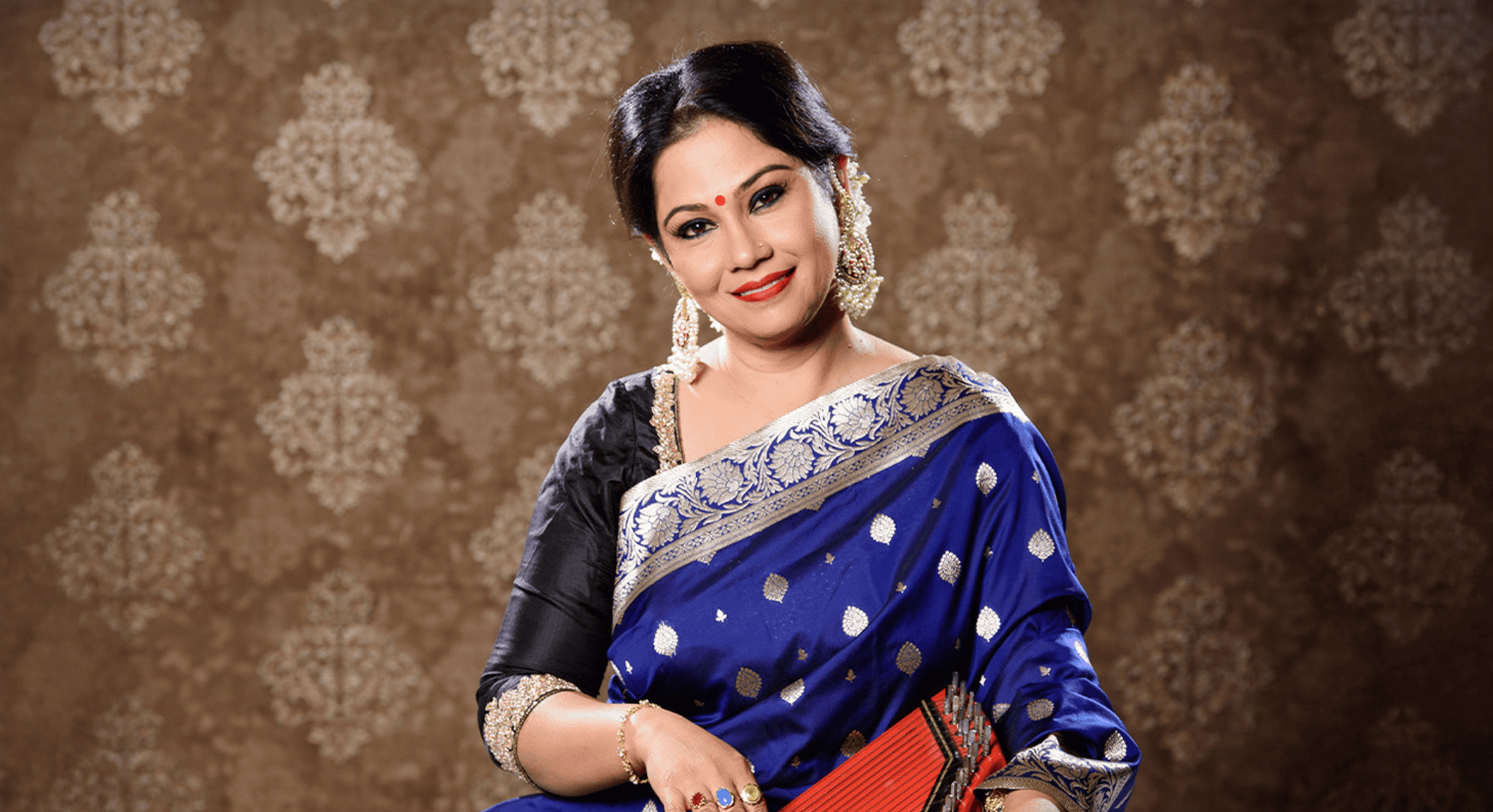
Begum Parveen Sultana

Begum Parveen Sultana’s voice is renowned for its extraordinary range, clarity, and versatility. Spanning nearly four octaves, she can swoop from patient meditations to powerful evocations of the divine in an instant. Equally at home with tackling khayal, thumri, or bhajan, she is a modern Hindustani superstar.
Born into a musical family of Afghan heritage, she started developing her unique style from early childhood. Aged five, her mother noticed her talent for humming along to her father’s own practice while sitting on his lap, and soon after she commenced her formal training. She imbibed the sounds of Lata Mangeshkar along with classical greats, and made her public debut aged twelve.
Later she studied under renowned scholar-musician Pandit Chinmoy Lahiri, famous for bringing together the ideas of nine different gharanas. At Lahiri’s home one day she met Bengali vocalist Dilshad Khan. They would go on to study together, marry, and tour the world performing jugalbandi vocal duets, intertwining their own Patiala and Kirana gharanas with styles from across North India.
Sultana has always prioritised classical forms (“the sadhana of it, the pleasure of it, the godliness of it, it can’t be replaced by anything”), but is famous for non-classical excursions too. Khayyam, a veteran film composer, has high praise: “If it’s tough, she’s the one to ask – she’ll deliver it like it’s the easiest thing you’ve created.” At age 26 she became the youngest artist to receive the Padma Shri, and has since been recognised by institutions from the Sangeet Natak Academy to MTV, as well as being awarded the title ‘Cleopatra of Music’.
She has performed at the Darbar Festival on two occasions. In 2008, she captivated audiences with renditions of ragas such as Hamsadhwani and Gujari Todi, performing alongside Yogesh Samsi, Nina Burmi, Ajay Joglekar, and Sandeep Mishra. She returned to the festival in 2018, taking the stage at the Barbican Theatre with Mukundraj Deo and Tanmay Deochake, further cementing her legacy as one of the finest vocalists of her generation.
“Musicians should open their ears to many different ideas. The personal creative impulse is more important than trying to limit yourself to your own tradition.”
Darbar believes in the power of Indian classical music to stir, thrill, and inspire. Explore our YouTube channel or subscribe to the Darbar Player to watch extended festival performances, talks, and documentaries in pristine HD and UHD quality.