Performance Format for Hindustani Classical Vocals: elements of a classical recital

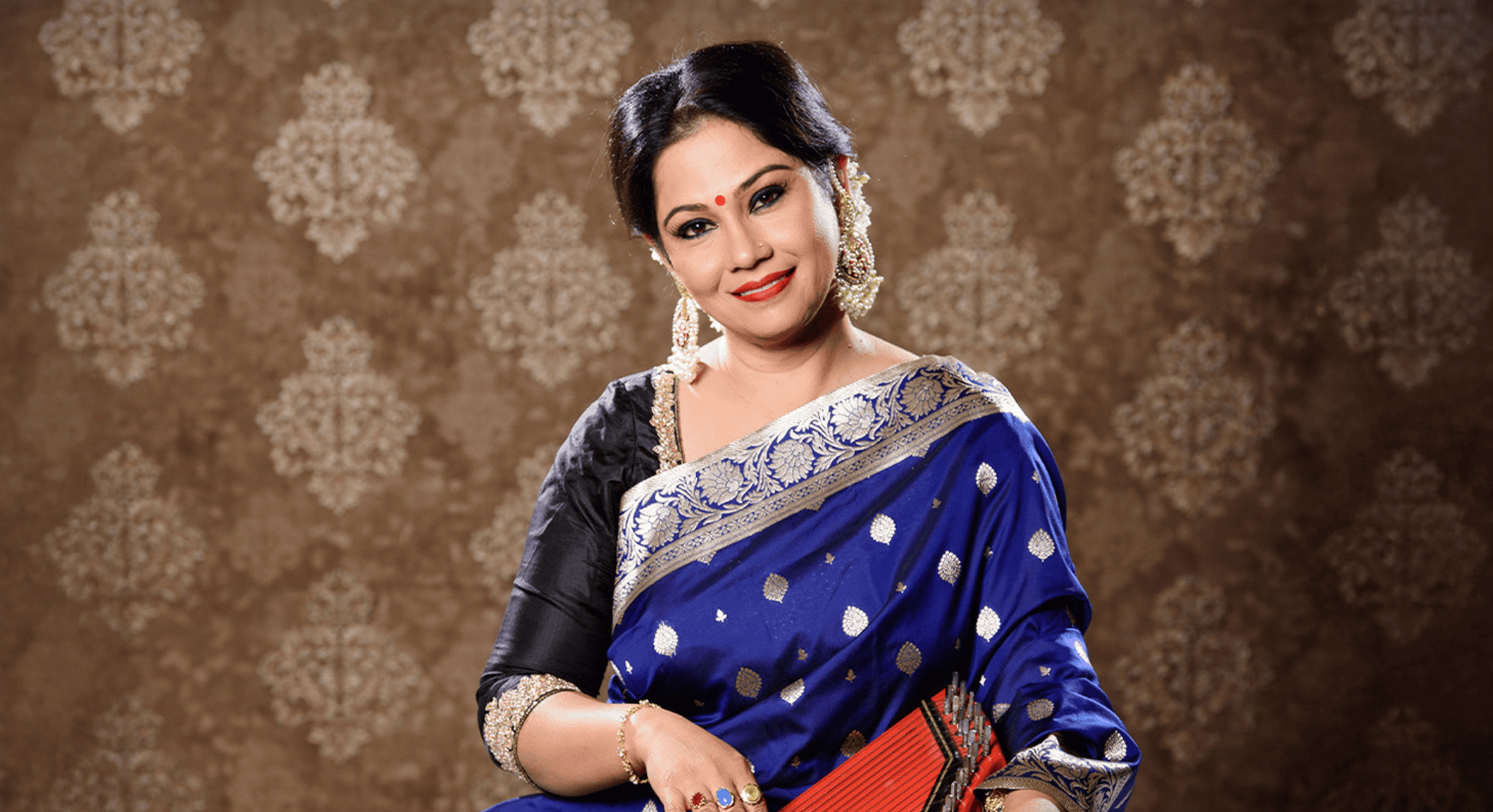
A vocal performance of classical Indian music is ranked higher than a purely instrumental one (see ‘the pecking order’). Nowadays, it is more usual to have performances of khayal, as opposed to the older, purer form of dhrupad. For khayal, there is usually just one soloist (often a maestro of some standing, male or female), sometimes supported by a senior or advanced student who is granted the privilege of also playing the accompanying tanpura to provide a constant drone in the background.
Other accompanying instruments are the tabla for percussion and some kind of melodic instrument, ideally a sarangi, although it is more usual to find a harmonium for melodic accompaniment. The role of the melodic instrument is purely a secondary one, mainly shadowing and filling in some interludes if the singer needs to pause, or to briefly think through the next improvisation since khayal, although based on a composed song text, is a highly ornamented improvised form of singing.
The melodic instrument player is typically seated to the left of the singer, whilst the percussionist sits on the right. The tanpura player usually sits just a little behind the vocalist.
Currently, particularly on international concert stages, there is a requirement for the audience to be able to see all the accompanying musicians, whereas traditionally, in the old days in India, accompanists, particularly tanpura players, were almost hidden behind the soloist, whilst accompanying musicians generally went unacknowledged and often uncredited on recordings.
The singer begins with a short alap (slow, pulse-free introduction) exploring the chosen raag (melodic structure) and its main characteristics. This section is usually sung without words and once the raag has been established, the main song text composition begins, in a very slow tempo known as vilambit. The song text is minimal in khayal and mostly acts as a refrain for the extensive improvisation that is required by this form of singing. The words are designed to usually match the general mood of the raag.
After this section, the singer will launch into a second composition in the same raag but usually a different taal (rhythm cycle) and the tempo is generally increased for the second piece. From raag exploration in the first piece, which concentrates on the notes of the raag, the focus now shifts to numerous technical flourishes and the rendition of complex taans (melodic passages) and ornamentation known as gamak.
Depending on the performer’s mood and audience reaction, there could be a third, even faster short composition in the same raag, or the singer could move on to an entirely different raag, again delivered in the same format as the first one.
On average, concerts last between two and two-and-a-half hours, so it is now more usual for the singer to move on to something entirely different from a lighter classical repertoire, usually a thumri or bhajan. For these shorter and lighter pieces, the emphasis is more on delivering the song text in an appropriate manner rather than a full exploration of the raag.
Jameela Siddiqi is an author, linguist, and BBC cultural commentator, specialising in postcolonial fiction and the devotional music of South Asia.
Darbar believes in the power of Indian classical music to stir, thrill, and inspire. Explore our YouTube channel, or subscribe to Darbar Player to watch extended festival performances, talks and documentaries in pristine HD and UHD quality.